
All-Purpose Paleoish Seasoning Blend
Ingredients
- 3 tablespoons (24 g) garlic powder
- 3 tablespoons (24 g) onion powder
- 2 tablespoons (14 g) smoked paprika
- 1 tablespoon (18 g) fine sea salt
- 2 teaspoons (4 g) ground black pepper
- 1 teaspoon (2 g) dried oregano, crushed between fingers
- 1 teaspoon (2 g) ground cumin
- 1/2 teaspoon (1 g) cayenne pepper, optional
Method
- Weigh each ingredient directly into a small bowl; weight is more consistent than volume for powders that clump, especially garlic and onion powder.
- Whisk for 30 seconds until the color is uniform, no dark streaks of paprika or cayenne remaining.
- Transfer to a dry 8-ounce (240 ml) glass jar with a tight lid.
- Label with the date. Use within 6 months for full aroma; the blend is still safe well past that but the paprika and oregano fade first.
- Use at a ratio of about 1/2 teaspoon per pound (225 g) of meat or vegetables before roasting or searing.
Paleoish means the pantry follows paleo logic (no grain flours, no refined sugar, no seed oil as a cooking fat) but keeps a small number of foods that strict paleo excludes, usually grass-fed butter, full-fat dairy from pasture-raised animals, or white rice for people who tolerate it better than other starches. The point of this list is to help you stock a kitchen that can produce a weeknight dinner without a grocery run, not to pass an ideology test.
What actually goes in a paleoish pantry
Group the shelf by function, not by food group. A working pantry needs a fat for high heat, a fat for finishing, an acid, a salt, a sweetener used sparingly, and a rotating set of dried aromatics.
- High-heat fats: refined avocado oil (smoke point around 500°F/260°C), coconut oil, ghee or clarified butter.
- Finishing fats: extra-virgin olive oil, unrefined coconut oil for baking.
- Acids: apple cider vinegar, red wine vinegar, fresh citrus.
- Salt: fine sea salt for measuring accuracy, flaky salt for finishing.
- Sweeteners, used in small amounts: raw honey, maple syrup. Neither is nutritionally different enough from table sugar to justify unlimited use; both are still added sugar by weight.
- Canned and jarred: full-fat coconut milk, fish packed in olive oil or water, tomatoes with no added sugar, olives.
- Dried: unsweetened coconut flakes, almond flour, tapioca starch or arrowroot for thickening, a rotating stock of whole and ground spices.
- Nuts and seeds: almonds, walnuts, pumpkin seeds, stored in the refrigerator or freezer once opened; the fats in raw nuts go rancid at room temperature within 1 to 2 months of opening.
The seasoning blend in the recipe card above uses eight of these dried staples in one jar, which is the practical payoff of stocking spices this way: fewer half-used bags of individual spices going stale in the back of your cabinet.
Where paleoish bends the paleo rules on purpose
Three ingredients account for most of the disagreement, and a paleoish pantry makes an explicit call on each rather than leaving it ambiguous.
- White rice. Strict paleo excludes all grains because of lectins and phytic acid in the bran and germ. White rice has had the bran and germ removed, so the argument against it is weaker than the argument against whole grains. Stock it if it works for your digestion; skip it if grain-free is your actual goal.
- Grass-fed dairy. Full-fat, grass-fed butter and ghee are common paleoish exceptions because the casomorphin and lactose concerns that drive strict exclusion are lower in butterfat than in milk or cheese. Ghee, which has the milk solids removed, is the more common of the two.
- Natural sweeteners. Honey and maple syrup are allowed on paleo because they’re unrefined, but metabolically they behave close to table sugar. A paleoish pantry keeps them for occasional baking, not daily coffee.
None of this is medical advice, and the evidence for paleo-style eating overall is thin: most studies are small, short-term (12 weeks or less), and don’t isolate which specific exclusion, if any, drives the result.
When a paleoish pantry stops working
Rancid oils and nuts causing bitter, “crayon” flavor in finished dishes. Cause: unrefined oils and raw nuts oxidize once opened and exposed to light or heat. Refined avocado oil past 6 months open, or almonds stored in a warm cabinet past 2 months, will taste faintly bitter or waxy before they smell obviously off. Smell it first: if an oil smells like old crayons or wet cardboard, discard it.
Clumped or caked spice jars. Cause: moisture from a stove-adjacent cabinet gets into the jar, especially with garlic powder and onion powder, which are hygroscopic. Store your spice jars away from the stove and check that lids seal tightly; a jar that’s caked into a solid brick has already lost most of its aromatic oil.
Seasoning blend tastes flat by month 4. Cause: paprika and dried oregano lose potency faster than salt or garlic powder. If the blend from the recipe card smells more like salt than paprika to you, it’s past its useful window even though it’s not unsafe to eat.
Substituting in the paleoish pantry, and where it breaks
Arrowroot and tapioca starch substitute for each other 1:1 as thickeners in sauces and gravies. Coconut oil and ghee substitute for each other in most sautéing, though coconut oil carries a faint coconut flavor that ghee doesn’t.
The substitution that does not work: almond flour for coconut flour in baking, at any ratio close to 1:1. Coconut flour absorbs roughly 4 times its volume in liquid because of its fiber content, so a recipe built for 1/4 cup (28 g) coconut flour needs closer to 1 cup (96 g) almond flour to match structure, and even then the texture comes out denser and less dry. Treat any coconut flour recipe as its own formula, not a swappable base.
How long pantry staples keep, and when to toss them
Whole spices hold potency for about 2 to 3 years unopened, ground spices for 1 to 2 years, and the seasoning blend above for up to 6 months before flavor fades noticeably. Opened nut and seed oils keep 3 to 6 months at room temperature or up to a year refrigerated; opened raw nuts keep 1 to 2 months at room temperature or up to 6 months in the freezer. None of these become unsafe to eat past those windows in a dry, sealed pantry; they just stop tasting like much. Label your jars with the open date, keep the pantry away from the stove’s heat, and refrigerate anything that lists “refrigerate after opening” on a jarred sauce or condiment.
Is white rice paleo or paleoish?
White rice is excluded from strict paleo but commonly allowed in paleoish pantries because milling removes most of the bran and germ where lectins and phytic acid concentrate. Whether to include it comes down to your personal tolerance, not a fixed rule.
Can I use regular butter instead of ghee in a paleoish recipe?
Regular butter works in most sautéing and roasting applications, but ghee has the milk solids removed, which raises its smoke point to about 485°F (252°C) versus roughly 350°F (177°C) for butter, and removes most of the lactose and casein that some paleoish eaters are avoiding.
What oil should I avoid keeping in a paleoish pantry?
Refined seed oils (soybean, canola, corn, sunflower) are the main exclusion, largely because of how they’re processed with high heat and solvents, not because of a single nutrient. Cold-pressed avocado oil and olive oil are the standard replacements for both cooking and finishing.
Does a paleoish pantry need to be grain-free to count?
No. “Paleoish” specifically signals a deliberate exception to strict grain exclusion, most often for white rice, so a pantry with a bag of jasmine rice in it still fits the term as long as flours, breads, and processed grain products stay out.
Keep the seasoning blend in a sealed 8-ounce (240 ml) jar in a cabinet away from the stove; it’s shelf-stable for 6 months and doesn’t need refrigeration. Build the rest of your pantry in the same spirit: buy oils and nuts in quantities you’ll use within their real shelf life, not in bulk sizes that outlast their flavor.
More sauces & dressings
See all →
Black or white sesame seeds for seed cycling: which phase gets which
Black sesame seeds go in the luteal-phase mix, white sesame in the follicular one: here's the ratio and…
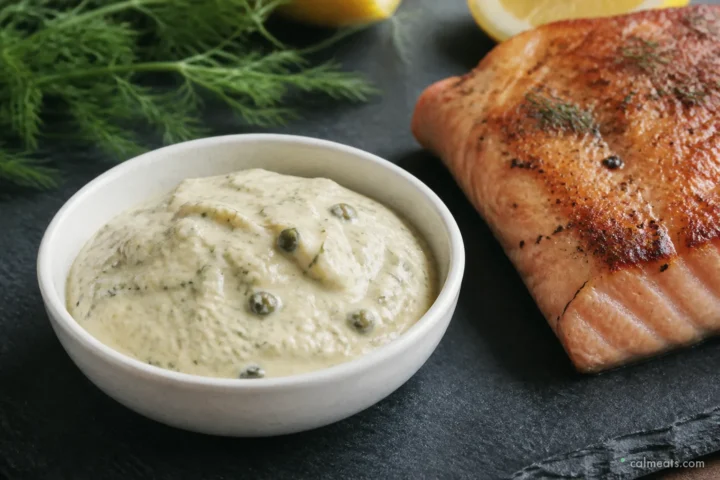
Creamy lemon caper sauce for fish and salmon
A mayonnaise-based lemon caper sauce that holds on the plate, with the ratio that keeps it from splitting.

What are digestive bitters, and how do you use them?
What digestive bitters are, what the evidence says about digestion and bloating, and how to make a simple…

Adzuki bean hummus with lemon and honey
Canned adzuki beans, tahini, lemon and honey blend into a hummus that skips the chickpea altogether.