Lemon Garlic Hummus
Ingredients
- 1 can (15.5 oz / 439 g) chickpeas, drained, liquid reserved
- 1/2 teaspoon baking soda
- 1/3 cup (80 g) tahini, well stirred
- 3 tablespoons (45 ml) fresh lemon juice, about 1 large lemon
- 1 small garlic clove (about 3 g), or 2 cloves for a stronger bite
- 3 tablespoons (45 ml) ice water, plus more as needed
- 2 tablespoons (30 ml) extra-virgin olive oil, plus more for serving
- 1/2 teaspoon fine sea salt, plus more to taste
- Pinch of ground cumin, optional
- Paprika, for serving
Method
- Put the drained chickpeas and baking soda in a small saucepan, cover with 2 inches (5 cm) of water and bring to a boil. Simmer 4 to 5 minutes, until the skins loosen and float free.
- Drain and rub the chickpeas between two kitchen towels or your palms under cool water to slip off the skins. Discard the skins; this step is what gives the puree its smoothness.
- In a food processor, blend the tahini and lemon juice for 1 minute until pale and slightly thickened.
- Add the garlic, salt and cumin if using. Blend 30 seconds.
- Add the peeled chickpeas. Blend 1 to 2 minutes, scraping down the sides once, until the mixture looks grainy and stiff.
- With the machine running, stream in the ice water, then the olive oil. Blend 1 to 2 minutes more, until the hummus is pale, glossy and falls in a slow ribbon off a spoon.
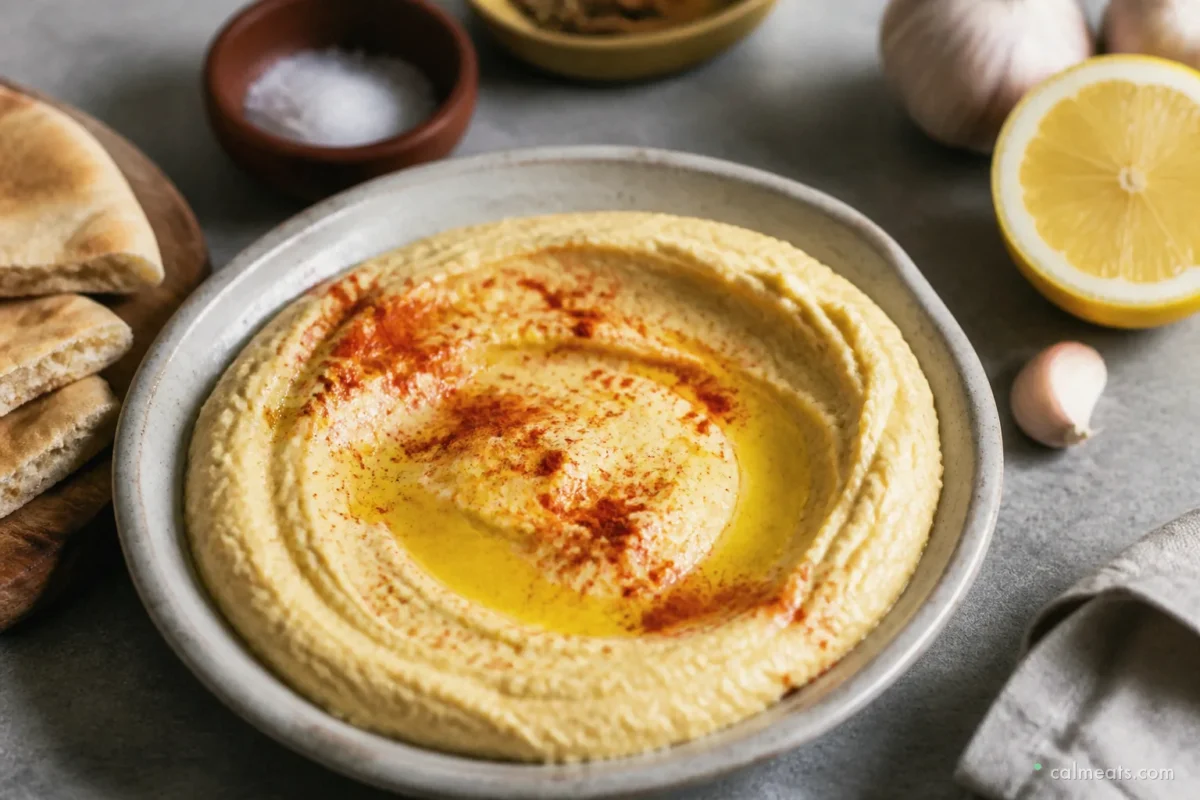
- Taste and adjust salt and lemon juice. Spread onto a plate, swirl the surface with the back of a spoon, and finish with a drizzle of olive oil and a dusting of paprika.
The texture of your hummus is set almost entirely by two things that have nothing to do with the seasoning: whether the chickpea skins come off, and whether the tahini gets emulsified with the lemon juice before the chickpeas go in. Skip either step and the result is grainy no matter how much garlic or lemon you add on top. This version uses a fixed ratio, roughly 1 part tahini to 3 parts drained chickpeas by weight, with 3 tablespoons (45 ml) each of lemon juice and ice water, because that ratio is what keeps your puree from separating or turning pasty.
Does hummus have dairy?
No. Traditional hummus contains chickpeas, tahini (ground sesame seed paste), lemon juice, garlic, olive oil and salt, none of which are dairy products. This recipe follows that formula exactly, so it is dairy free and, because no wheat-based ingredient is used, gluten free as well. The tahini can read as creamy enough to be mistaken for a dairy addition, but that texture comes from sesame oil content and emulsification, not from milk or cream.
Is hummus gluten and dairy free?
Yes, standard hummus made from chickpeas, tahini, lemon, garlic, olive oil and salt contains neither gluten nor dairy. Read the label if you buy store-bought tubs, though: some brands add yogurt, sour cream or wheat-based thickeners to cut cost, which introduces both allergens. A recipe made from scratch, like this one, avoids that risk entirely.
Is hummus easy to digest, or hard on the stomach?
For most people, hummus is easier to digest than whole chickpeas, because blending and cooking break down some of the raunose-family oligosaccharides that cause gas, and peeling the skins removes a large share of the insoluble fiber that ferments in the colon. Chickpeas do contain FODMAPs (fermentable oligosaccharides), and for people with IBS or a sensitive gut, even a smooth hummus can trigger bloating, cramping or gas, since the fiber and oligosaccharide content is still substantial per serving. If hummus reliably causes you discomfort, the more likely culprits are portion size, raw garlic, or the olive oil itself. Olive oil is not generally hard to digest, but a heavy pour on an already rich dip can slow gastric emptying enough to feel uncomfortable in a large serving.
Are chickpeas hard to digest, or easy?
Chickpeas sit in the middle: they’re easier to digest than dried beans eaten straight from the can, because canning and further cooking (as in step 1 of this recipe) soften pectin and reduce raffinose sugars, but they’re harder to digest than, say, white rice, because a 1/2-cup serving still carries 6 to 7 grams of fiber. Canned chickpeas can contain small amounts of lectins, plant compounds that in raw or undercooked legumes interfere with nutrient absorption and irritate the gut lining, but commercial canning involves a high-heat process that denatures most of the lectin content — this is one of the few instances where canned is functionally safer than raw, not just more convenient.
Is hummus good for gut health or stomach comfort?
Some small studies have linked chickpea fiber to short-chain fatty acid production in the colon, which feeds beneficial bacteria, but the studies are small, often short-term, and don’t establish that hummus itself, as opposed to isolated chickpea fiber, produces the same effect at typical serving sizes. Hummus is not a cure for digestive issues and won’t reverse an inflamed gut. What it reliably offers is a plant-based source of fiber and unsaturated fat in a form that most people tolerate better than the same chickpeas eaten whole, which is a modest, mechanical claim rather than a health one.
Building a healthy hummus recipe without extra sodium or filler oil
This recipe uses 1/2 teaspoon fine sea salt and 2 tablespoons (30 ml) olive oil for the full 2 1/2-cup (600 g) batch, well under what most store tubs carry per serving. A standard commercial hummus can run 150 to 250 mg sodium per 2-tablespoon serving; built this way, a serving lands closer to 90 to 110 mg, depending on how much salt you add at the end. If you want it lower still, cut the salt to 1/4 teaspoon and season individual portions instead of the whole batch, since salt added at the end tastes stronger than the same amount blended in.
Grainy, bitter, or split: how this hummus fails
Grainy hummus, despite long blending, means the chickpea skins were left on. The skins are cellulose fiber that a food processor cannot fully pulverize; boiling with 1/2 teaspoon baking soda for 4 to 5 minutes loosens them enough to rub off by hand, and this step cannot be skipped for a smooth result. Bitter hummus usually means your tahini was old or unstirred; tahini separates in the jar, and the oil layer on top tastes sharp and rancid if you scoop it without remixing the solids below. A split or oily-looking hummus, where the fat pools on the surface after resting, means the olive oil was added before the tahini and lemon juice had fully emulsified; always stream your oil in only after the mixture already looks pale and cohesive.
Substitutions, and where lemon or garlic cannot be swapped
For garlic-free hummus, omit the clove entirely rather than substituting garlic powder in equal measure; powder concentrates differently under blending and tends to taste dusty rather than sharp. A pinch (about 1/8 teaspoon) of asafoetida powder, common in low-FODMAP cooking, gives a savory background note without the raw bite, though it is optional and you can leave it out. For a hummus recipe without lemon, replace the 3 tablespoons (45 ml) lemon juice with the same volume of the reserved chickpea liquid plus 1 teaspoon rice vinegar; the acidity will be milder and the color slightly darker. What cannot be swapped is the tahini: cashew butter or sunflower seed butter will make a spread, but it will not taste like hummus, and the fat content is different enough that the ratio in this recipe will not hold, producing something either too stiff or too loose.
Hummus meals and where it fits on a Mediterranean plate
Hummus is a component, not a meal on its own; a 1/4-cup (about 60 g) serving provides roughly 4 to 5 grams of protein and 6 to 7 grams of fiber, which pairs well with a protein source like grilled chicken, falafel, or a soft-boiled egg to make a full plate for you. On a Mediterranean-style eating pattern, hummus commonly appears alongside raw vegetables, olives, whole-grain pita, and a lean protein rather than as the centerpiece, since the pattern emphasizes variety across a meal rather than any single dish carrying nutritional weight.
Is hummus good for digestion, and why might it hurt my stomach?
Hummus can support easier digestion than whole legumes because cooking and blending reduce resistant starch and break down some fibrous structure, but it can also cause stomach discomfort if you’re sensitive to FODMAPs, garlic, or large fat servings in one sitting. If hummus consistently causes you pain, try a garlic-free version first, since raw garlic is a common individual trigger separate from the chickpeas themselves.
Store your leftover hummus in an airtight container in the refrigerator for up to 5 days; the surface will darken slightly from oxidation, which is cosmetic, not spoilage, but discard it if it develops an off, sour smell distinct from its usual tang. It does not freeze well: the emulsion breaks on thawing and separates into a grainy paste no amount of stirring fully repairs, so make only as much as you will eat within the week.
More sauces & dressings
See all →
What are digestive bitters, and how do you use them?
What digestive bitters are, what the evidence says about digestion and bloating, and how to make a simple…

Black or white sesame seeds for seed cycling: which phase gets which
Black sesame seeds go in the luteal-phase mix, white sesame in the follicular one: here's the ratio and…

Vegan walnut pesto with peas
A vegan walnut pesto that gets its body from peas and toasted walnuts, no cashews or nutritional yeast…
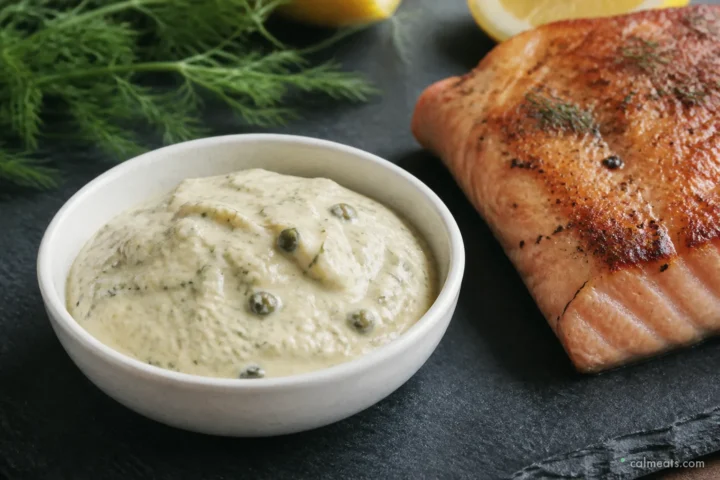
Creamy lemon caper sauce for fish and salmon
A mayonnaise-based lemon caper sauce that holds on the plate, with the ratio that keeps it from splitting.