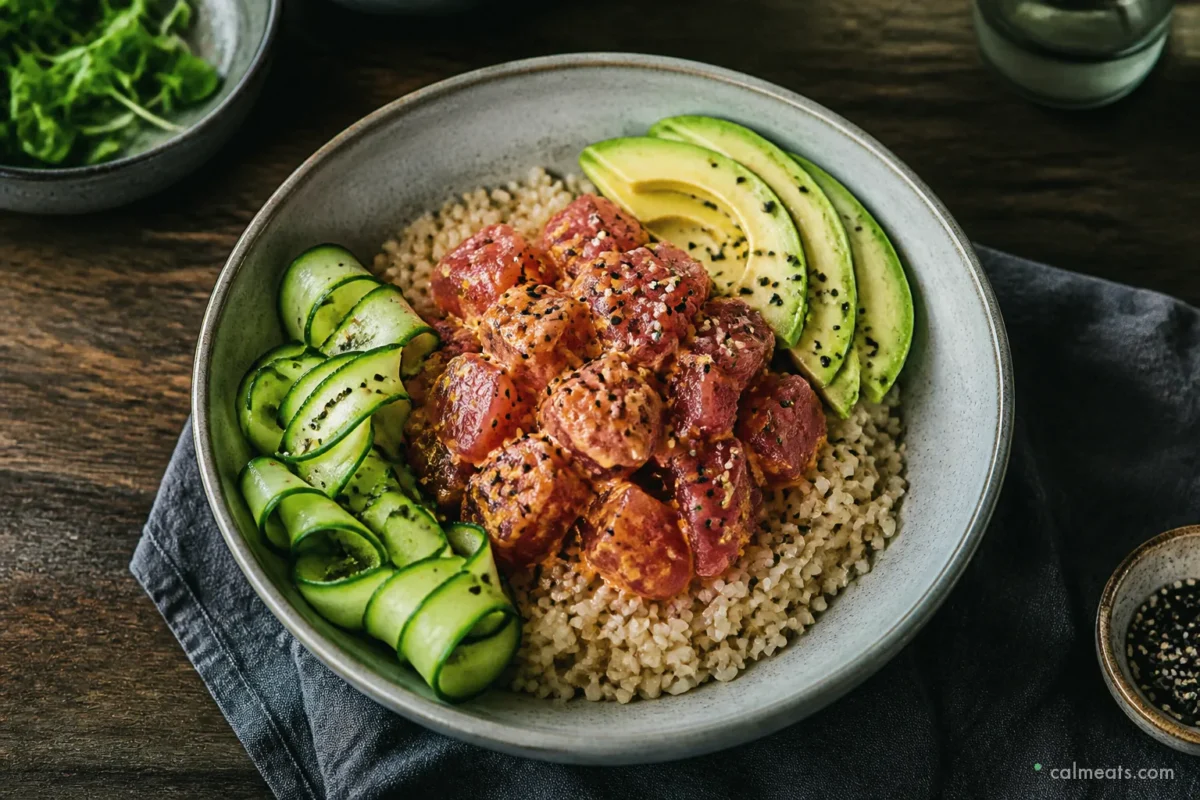
Smoked and Spicy Tuna Sushi Bowl
Ingredients
- 1 cup (185 g) sushi rice, uncooked
- 1 1/4 cups (300 ml) water
- 2 tablespoons (30 ml) rice vinegar
- 1 teaspoon (5 g) sugar
- 1/2 teaspoon (3 g) salt
- 2 cans (5 oz / 142 g each) smoked albacore tuna, drained
- 3 tablespoons (45 g) mayonnaise
- 1 tablespoon (15 ml) sriracha, more to taste
- 1 teaspoon (5 ml) toasted sesame oil
- 1 teaspoon (5 ml) soy sauce
- 1 avocado, sliced
- 1/2 English cucumber, ribboned or diced
- 1 sheet nori, cut into thin strips
- 1 tablespoon (9 g) toasted sesame seeds
- 1 scallion, thinly sliced
Method
- Rinse the sushi rice in cold water until the water runs mostly clear, about 4 rinses.
- Combine rice and 1 1/4 cups (300 ml) water in a saucepan. Bring to a boil, cover, reduce heat to low, and cook 12 minutes without lifting the lid.
- Remove from heat and let stand, covered, for 10 minutes.
- Warm the rice vinegar, sugar, and salt just until dissolved, about 30 seconds. Fold into the hot rice with a cutting motion, then spread the rice on a tray to cool to room temperature, about 10 minutes.
- Drain the canned tuna firmly, pressing out excess liquid, then flake it with a fork into small, even pieces.
- Stir together mayonnaise, sriracha, sesame oil, and soy sauce until smooth. Fold in the flaked tuna until evenly coated.
- Divide the seasoned rice between two bowls. Top with the spicy tuna, avocado, cucumber, and nori strips.
- Finish with sesame seeds and scallion.
The tuna in this bowl comes from a can, not a fish counter, which means the whole recipe hinges on how well you drain it and how firmly you press out the liquid before it touches the mayo. Skip that step and the sauce turns watery instead of clinging to the flakes. This is a weeknight bowl built for pantry tuna, not a substitute for raw sashimi-grade fish, and it does not pretend otherwise.
Why canned tuna works for a sushi bowl
Raw tuna needs to be sashimi-grade, handled at controlled temperatures, and eaten within a day or two of purchase. Canned smoked albacore sidesteps all of that: it is fully cooked, shelf-stable, and already broken into flake-sized pieces that take on the sriracha mayo without any knife work. The smoke flavor also stands in for some of the richness raw tuna gets from fat content, so the bowl doesn’t taste thin the way plain canned tuna sometimes does.
Use 2 cans (5 oz / 142 g each) of smoked albacore, drained hard. Press the tuna against the side of the can or in a fine-mesh strainer until no liquid runs out. A can that still weeps into the mayo will thin the sauce below the point where it coats the fish, and the bowl reads greasy instead of glossy.
Getting the spicy mayo ratio right
The sauce is 3 tablespoons (45 g) mayonnaise to 1 tablespoon (15 ml) sriracha, plus 1 teaspoon (5 ml) toasted sesame oil and 1 teaspoon (5 ml) soy sauce. That ratio sits close to 3:1 mayo to sriracha, which keeps the heat present without curdling the color into pure orange. Whisk the four ingredients together before adding the tuna so the sriracha and soy sauce are fully emulsified into the mayo rather than pooling separately when they hit the fish.
Taste the sauce before folding in the tuna, not after. Canned albacore carries its own salt from the packing process, and adding more soy sauce once the tuna is already mixed in risks pushing the whole bowl past the point where the rice’s mild vinegar seasoning can balance it.
Cooking sushi rice for a bowl, not a roll
Rinse 1 cup (185 g) sushi rice until the runoff is mostly clear, roughly 4 changes of water. This removes surface starch that would otherwise make the grains gummy in a bowl format, where you want distinct, separate grains rather than the sticky cohesion a roll needs to hold its shape.
Cook the rinsed rice in 1 1/4 cups (300 ml) water: bring to a boil, cover, drop the heat to low, and cook exactly 12 minutes without lifting the lid. Steam builds pressure that finishes the grains evenly, and lifting the lid lets that pressure escape too early, leaving the center of the pot undercooked. Rest, covered, for 10 minutes off heat before seasoning.
Season with a warmed mixture of 2 tablespoons (30 ml) rice vinegar, 1 teaspoon (5 g) sugar, and 1/2 teaspoon (3 g) salt, folded in with a cutting motion rather than stirred, which keeps the grains intact instead of mashing them into paste.
Soggy rice and separated sauce: how this bowl fails
The two failure modes here are specific and both preventable. Soggy, clumped rice happens when the vinegar seasoning is folded in while the rice is still boiling hot and the tray isn’t spread out to release steam — let the rice cool to room temperature, about 10 minutes on a wide sheet pan, before it goes into the bowl. Separated, watery sauce happens when the canned tuna isn’t drained firmly enough, so residual can liquid dilutes the mayo mixture after the fact instead of the tuna simply absorbing it.
A third, smaller failure: over-microwaving leftover rice. Sushi rice reheated at full power for too long turns leathery at the edges before the center is warm. Reheat in 20-second bursts with a damp paper towel over the bowl instead.
Swapping ingredients, and the one substitution that won’t work
Cauliflower rice is a reasonable low-carb swap for the sushi rice if you’re building a tuna power bowl or tuna cauliflower rice version: steam or microwave riced cauliflower for about 4 minutes, then squeeze out excess water in a clean towel before serving, since raw cauliflower rice releases liquid that will thin the mayo sauce the same way undrained tuna does. Cucumber can be swapped for shredded carrot or edamame, and the nori strips are optional if you don’t keep sheets on hand.
The one substitution that does not work: raw or seared fresh tuna in place of the canned, smoked albacore, without changing the sauce. Fresh raw tuna carries more moisture and a milder flavor, so the same 3:1 mayo-to-sriracha ratio reads as overpowering rather than balanced, and food-safety handling for raw fish is a separate set of rules this recipe was not built around. If you want a raw version, treat it as a different recipe, not a straight swap.
Questions cooks ask about spicy tuna bowls
Can you make a spicy tuna bowl with canned tuna instead of raw fish?
Yes, canned tuna is the base of this recipe rather than a substitute for it. Smoked albacore packed in cans is fully cooked and shelf-stable, so it skips the sashimi-grade sourcing and same-day handling that raw tuna bowls require.
What makes spicy mayo taste like sushi-restaurant spicy mayo?
The ratio matters more than the brand of sriracha: roughly 3 parts mayonnaise to 1 part sriracha, with a small amount of toasted sesame oil for aroma. Toasted sesame oil specifically, not plain sesame oil, gives the nutty back note most restaurant versions have.
Is a tuna sushi bowl a healthy tuna bowl option?
It can fit into a varied diet: canned albacore supplies protein and some omega-3 fatty acids, though research on omega-3 intake and heart health is mixed and many studies are short-term or observational. The mayo and rice also add calories and sodium, so portion size affects how the bowl fits into any broader eating pattern.
Can albacore tuna be used for nigiri instead of a bowl?
Only if it is labeled sashimi-grade fresh albacore, not the canned smoked version in this recipe. Canned tuna’s texture is flaked and soft, which works for a bowl but won’t hold together as a sliced nigiri topping.
Storing and reheating the components separately
Store the seasoned rice and the spicy tuna mixture in separate airtight containers in the refrigerator for up to 3 days; combining them ahead of time softens the rice faster. The spicy tuna mixture itself is best used within 2 days, since mayo-based mixtures lose texture with each day refrigerated. Assemble bowls cold or with the rice gently reheated, and add avocado, cucumber, and nori just before serving so they don’t wilt in storage.
More entrees
See all →
Baked marinated chicken breast, grilled in the oven
Baked marinated chicken breast that browns like it hit a grill, using a broiler-finish oven method with exact…

Coconut Crusted Chicken Tenders with Honey Mustard Sauce
Coconut crusted chicken tenders baked at 425°F until the crust sets, served with a 3-ingredient honey mustard sauce.

Grilled salmon with sweet potato puree and crunchy green beans
A weeknight method for grilled salmon and sweet potato puree, with green beans cooked to a snap, not…

A 7-day gut health diet plan built around fiber grams, not food rules
A 7-day gut health diet plan with fiber grams per meal, prep times, and a printable dinner recipe…