
Vegetable Shirataki Noodles in Thai Peanut Sauce
Ingredients
- 2 (7 oz / 200 g) packages shirataki noodles
- 1 teaspoon toasted sesame oil
- 3 tablespoons (48 g) natural peanut butter
- 2 tablespoons (30 ml) tamari or soy sauce
- 1 tablespoon (15 ml) rice vinegar
- 1 tablespoon (15 ml) fresh lime juice
- 1 tablespoon (15 g) allulose or brown sugar substitute
- 1 clove garlic, grated
- 1/2 teaspoon grated fresh ginger
- 2 to 4 tablespoons (30 to 60 ml) hot water, to thin
- 1 cup (110 g) julienned carrot
- 1 cup (90 g) thinly sliced red bell pepper
- 2 scallions, sliced on the bias
- 2 tablespoons (18 g) chopped roasted peanuts
- Pinch of red pepper flakes, optional
Method
- Drain the shirataki noodles in a colander and rinse under cold running water for 60 seconds to wash off the konjac gel and its packing odor.
- Bring a small pot of water to a boil, add the noodles, and boil for 2 minutes. Drain well.
- Heat a dry skillet over medium-high heat. Add the noodles with no oil and dry-fry for 4 to 5 minutes, shaking the pan, until they squeak against the metal and no longer look wet. This step is not optional: skipped, the noodles stay watery and dilute the sauce.
- Push the noodles to one side, add the sesame oil, then add the carrot and bell pepper. Stir-fry for 2 minutes, until the vegetables are crisp-tender, not soft.
- In a small bowl, whisk the peanut butter, tamari, rice vinegar, lime juice, allulose, garlic and ginger until smooth. Whisk in hot water 1 tablespoon at a time until the sauce coats a spoon but drips off slowly, not a paste.
- Pour the sauce over the noodles and vegetables. Toss over low heat for 1 minute until every strand is coated.
- Remove from heat, top with scallions, chopped peanuts and red pepper flakes if using, and serve immediately.
Shirataki noodles carry their own packing liquid, and that liquid, not the noodle itself, is what makes most home attempts taste rubbery or bland. Rinse them wrong and your sauce turns watery no matter how good it is. This recipe treats that as the central problem: boil, then dry-fry, before any sauce touches the pan.
Why shirataki noodles need dry-frying, not just rinsing
Shirataki and konjac noodles are close to 97% water, bound by glucomannan, a soluble fiber pulled from the konjac plant (Amorphophallus konjac) tuber. Rinsing removes the sour, slightly fishy packing brine, but it does not remove the water inside the noodle itself. A 2-minute boil followed by 4 to 5 minutes in a dry, hot skillet drives off enough of that internal water that the noodle can actually absorb sauce instead of just sitting in it. Skip the dry-fry and your noodles squeak less, taste flatter and dilute the peanut sauce within minutes of plating.
Building the peanut sauce: ratio, not guesswork
The sauce here is 3 tablespoons (48 g) peanut butter to 2 tablespoons (30 ml) tamari to 1 tablespoon (15 ml) each of rice vinegar and lime juice, thinned with 2 to 4 tablespoons (30 to 60 ml) hot water. That 3:2:1:1 ratio is the base to memorize: more peanut butter than any single liquid, acid split between vinegar and citrus so it doesn’t read as one-note sour. Add your hot water gradually. Too much at once and the sauce breaks into a thin, oily layer over a paste; you cannot easily bring it back together once split.
Is Thai peanut sauce keto friendly?
This version is, at roughly 4 g net carbs per serving of sauce, because it uses allulose instead of brown sugar and tamari instead of a sweetened bottled sauce. Most commercial Thai peanut sauces run 6 to 10 g sugar per 2-tablespoon serving, which adds up fast over a bowl of noodles. Swapping the sweetener is what makes or breaks the keto claim here, not the peanut butter.
What to make with shirataki noodles
Beyond this peanut sauce, shirataki noodles work in miracle noodle pad Thai (tamarind, fish sauce, egg, dry-fried the same way first), a light glass-noodle-style soup with dashi and scallion, or cold with sesame oil and rice vinegar as a low calorie noodle salad. They take on flavor rather than contribute much of their own, which is exactly why the dry-fry step matters more here than in a wheat noodle dish: there is no gluten structure to fall back on if your noodle stays wet.
Watery sauce and rubbery bite: the two ways this dish fails
Watery, separated sauce pooling under the noodles: the noodles were rinsed but not boiled and dry-fried, so residual internal moisture leaches out after tossing and thins the sauce within 5 minutes of plating. Rubbery, squeaky-in-a-bad-way texture that never softens: the dry-fry ran too hot or too long, past 5 to 6 minutes, which toughens the glucomannan structure instead of just evaporating surface water. Watch for your noodles to go from wet-looking to matte and slightly curled; that is the stopping point, not a fixed number of minutes.
Swapping the peanut butter, and the one swap that breaks the sauce
Almond butter or sunflower seed butter both work in place of peanut butter at the same 3-tablespoon (48 g) quantity, with a slightly less rounded flavor. Tamari can be swapped for coconut aminos for a soy-free version, though the sauce will taste noticeably sweeter and may need an extra 1/2 teaspoon lime juice to compensate. The one substitution that does not work: swapping the shirataki noodles themselves for regular rice or wheat noodles and expecting the same low calorie profile. Shirataki noodles run about 10 to 20 calories per 7 oz (200 g) package; a similar amount of cooked rice noodles runs closer to 220 calories. The sauce ratio and cook times in this recipe assume glucomannan noodles specifically, not a grain-based substitute, so keep that in mind if you plan to substitute.
Questions cooks ask about shirataki
What is shirataki plant?
Shirataki noodles are made from the konjac plant, specifically the glucomannan fiber extracted from its tuber, mixed with water and sometimes a small amount of soy or tofu for the softer “tofu shirataki” variety sold in the US. The plant itself is not eaten directly; only the processed fiber becomes noodles.
Are shirataki noodles the same as konjac noodles?
Yes. “Shirataki” is the Japanese product name and “konjac noodle” describes the source ingredient; both terms refer to the same glucomannan-based noodle sold under brands like Miracle Noodle and NoOodle.
Can this recipe work as a shirataki noodles dessert?
Not this version, since the sauce is savory and salty, but the plain noodles themselves can carry a sweet application: rinsed, boiled and dry-fried the same way, then tossed cold with cinnamon, allulose and a little coconut milk. The texture stays chewy rather than soft, so it reads closer to a chilled noodle salad than a traditional dessert.
What’s a good low carb substitute if I can’t find shirataki noodles?
Spiralized zucchini or a julienne peeler on daikon radish will both take this peanut sauce well, though neither needs the boil-and-dry-fry step; they just need a quick 90-second sear to release excess water before saucing.
Store leftovers in an airtight container in the refrigerator for up to 2 days. Your noodles release water as they sit, so drain off any pooled liquid and toss with a teaspoon of hot water to loosen the sauce before reheating gently in a skillet over low heat. Do not freeze: shirataki noodles turn spongy and separate irreversibly once frozen and thawed.
More entrees
See all →
Keto Chicken Tacos: Instant Pot or Crock-Pot, No Salsa
Keto chicken tacos made with 3 lb (1.36 kg) chicken thighs, no salsa, no added sugar, Instant Pot…

Keto sausage, veggie and cauliflower rice fry-up
A 25-minute keto sausage and vegetable stir fry with cauliflower rice, sized so the pan never steams.

Coconut Crusted Chicken Tenders with Honey Mustard Sauce
Coconut crusted chicken tenders baked at 425°F until the crust sets, served with a 3-ingredient honey mustard sauce.
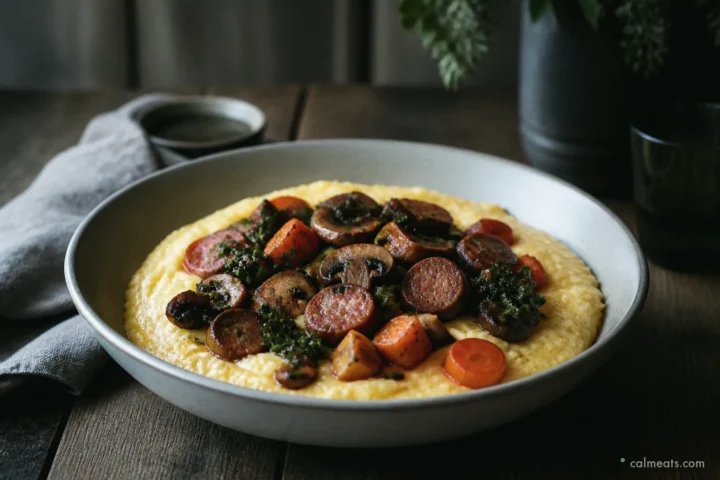
Mushroom Polenta with Sausage and Roasted Carrots
Dairy-free mushroom polenta with sausage and roasted carrots: creamy stock-based polenta in 35 minutes, no cheese required.