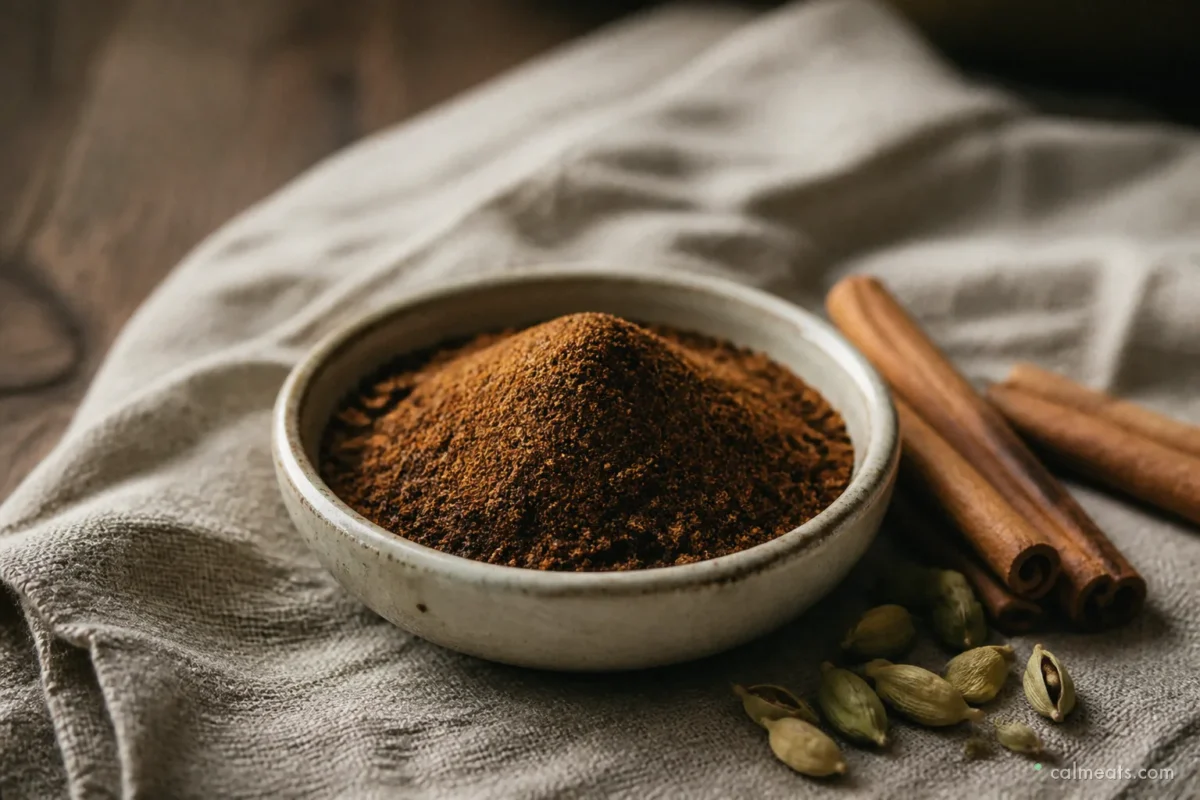
Homemade Garam Masala
Ingredients
- 2 tablespoons cumin seeds (13 g)
- 2 tablespoons coriander seeds (12 g)
- 1 tablespoon black peppercorns (6 g)
- 2 teaspoons cardamom seeds, from about 15 green pods (4 g)
- 1 (3-inch/7.5 cm) cinnamon stick, broken up (5 g)
- 1 teaspoon whole cloves (2 g)
- 1 whole star anise (1 g)
- 1/2 teaspoon grated nutmeg (1 g)
- 1 bay leaf, crumbled
Method
- Set a dry skillet over medium-low heat. Add the cumin seeds, coriander seeds, black peppercorns, cardamom seeds, cinnamon, cloves, star anise, and bay leaf.
- Toast, shaking the pan constantly, for 90 seconds to 2 minutes, until the cumin darkens by one shade and the mix smells sharp and toasty rather than raw. Pull it off heat the moment you smell any smoke; do not walk away.
- Tip the toasted spices onto a plate and let them cool completely, about 5 minutes. Grinding warm spices creates steam that clumps the powder.
- Transfer to a spice grinder or a clean coffee grinder. Add the grated nutmeg. Grind in 10-second bursts, scraping down the sides between bursts, until you have a fine, even powder with no visible cracked peppercorn, about 30 to 45 seconds total.
- Sift through a fine-mesh strainer if any coarse fragments remain, and regrind those separately.
- Store in an airtight jar, away from heat and light.
Whole spices toasted and ground fresh hold their aroma for about 3 months. The same blend bought pre-ground on a shelf has usually already lost half its fragrance by the time it reaches you, because ground spice oxidizes fast. That difference, not tradition, is the reason to make this yourself: 2 minutes of toasting and 30 seconds of grinding against a jar that may already be stale.
What’s in garam masala
Garam masala is a ground blend of warming whole spices, built around a base of cumin, coriander, and black pepper, layered with cardamom, cinnamon, cloves, and usually one or two accent spices such as star anise, nutmeg, or bay leaf. This version uses 2 tablespoons cumin seeds (13 g), 2 tablespoons coriander seeds (12 g), 1 tablespoon black peppercorns (6 g), 2 teaspoons cardamom seeds (4 g), one 3-inch (7.5 cm) cinnamon stick (5 g), 1 teaspoon whole cloves (2 g), 1 whole star anise (1 g), 1/2 teaspoon grated nutmeg (1 g), and 1 bay leaf. There is no single fixed recipe: garam masala varies by region and household, but the cumin-coriander-pepper base stays constant across nearly all of them.
What does garam masala taste like, and is it spicy
Garam masala is warm and aromatic, not hot. It carries the peppery bite of black peppercorns and the sweetness of cinnamon and cardamom, with cloves giving it a resinous depth. The heat in an Indian dish almost always comes from chile powder or fresh chiles added separately, not from the garam masala itself. If a dish you’re making tastes sharp-hot rather than warm-fragrant, the heat is coming from something else in the pot.
Is garam masala the same as curry powder
No. Curry powder is a British-colonial invention that usually includes turmeric and often chile powder, giving it a yellow color and a flatter, more one-note flavor. Garam masala rarely contains turmeric and is added at a different stage of cooking, typically stirred in near the end or sprinkled on top, to preserve its aroma rather than cook it down.
How to make garam masala at home
Set a dry skillet over medium-low heat with no oil. Add all the whole spices except the nutmeg: the cumin, coriander, peppercorns, cardamom seeds, cinnamon, cloves, star anise, and bay leaf. Toast for 90 seconds to 2 minutes, shaking the pan constantly. The cumin seeds should darken by roughly one shade and the smell should shift from raw and dusty to sharp and toasted. The moment you catch any whiff of smoke, pull the pan off the heat; scorched spices turn bitter within seconds.
Cool the spices completely on a plate, about 5 minutes, before grinding. Warm spices release steam in a grinder, which clumps the powder into a paste instead of a fine dust. Grind with the nutmeg in 10-second bursts, scraping the grinder walls between bursts, for 30 to 45 seconds total, until no cracked peppercorn is visible. Sift out any coarse bits and regrind them.
Bitter, dull, or gritty garam masala: why it happens
Bitter blend from scorched spices. Once cumin or cloves pass from toasted to blackened, the compounds responsible for their fragrance break down into bitter, acrid ones. This happens fast, often within 15 seconds of the first wisp of smoke, so pull your pan early rather than late.
Flat, dull powder from stale seeds. Whole spices that have sat in a pantry for over a year lose most of their essential oils even before toasting. If the seeds don’t smell strongly of anything straight from the jar, toasting won’t revive them.
Gritty texture from under-grinding. Black peppercorns and cardamom pods are harder than cumin and coriander and resist grinding. If you grind for less than 30 seconds, you’ll get a powder that looks fine but has hard flecks of pepper throughout. Sift and regrind rather than pushing through a coarse batch.
Garam masala substitute and replacement options
If you have no whole spices to toast, the closest one-for-one substitute for garam masala is a blend of 1/2 teaspoon ground cumin, 1/2 teaspoon ground coriander, 1/4 teaspoon ground black pepper, 1/4 teaspoon ground cinnamon, and a pinch each of ground cloves and cardamom, mixed to replace 1 teaspoon garam masala. Pumpkin pie spice is a common pantry substitute for the sweeter, cinnamon-cardamom-clove side of garam masala, but it lacks the cumin and coriander base entirely and will make a savory curry taste like dessert if you use it alone; use it only mixed half-and-half with ground cumin. Curry powder can stand in in a pinch, at a 1:1 ratio, but it will shift the dish toward turmeric-forward and duller, since curry powder lacks garam masala’s brighter, toasted top notes. There is no substitute that reproduces the fresh-toasted aroma exactly: pre-mixed ground blends, however close on paper, cannot match spices ground within the hour.
How long homemade garam masala keeps
Store the ground powder in an airtight jar, away from heat and light, and it will hold strong aroma for about 3 months and remain usable, if fainter, for up to 6. Keep it away from the stove itself: heat radiating off a burner degrades the volatile oils faster than ambient kitchen temperature. Whole, untoasted spices for future batches keep far longer, up to 2 years, so it’s worth toasting and grinding only what you’ll use in a season rather than making a large batch upfront.
What can I use instead of garam masala?
A mix of ground cumin, coriander, black pepper, cinnamon, and a pinch of cloves and cardamom, combined in roughly a 2:2:1:1 ratio with a pinch of the last two, comes closest. Curry powder or pumpkin pie spice mixed with plain cumin will work as a rougher stand-in, but neither matches the toasted aroma of fresh garam masala.
What is in masala?
“Masala” alone just means “spice blend” in Hindi and Urdu and refers to any mixture of ground spices, not one fixed recipe. Garam masala specifically means “warming spice blend” and centers on cumin, coriander, black pepper, cardamom, cinnamon, and cloves.
Where can I buy garam masala near me if I don’t want to make it?
Most US grocery chains stock at least one brand in the international or spice aisle, and Indian and South Asian grocery stores carry several brands at a lower price per ounce than supermarket versions. Check the packing date if visible: ground spice blends lose potency within months, so a jar that has sat on your shelf for over a year will taste noticeably weaker than a fresh one.
Can I use pre-ground spices instead of whole ones for this recipe?
Yes, but skip the toasting step and expect a flatter flavor, since pre-ground spices burn almost instantly in a dry pan rather than toasting evenly. Use about 3/4 the volume of each whole-spice measurement, since ground spices are denser by volume than their whole form.
More sauces & dressings
See all →
Is mayo keto? Yes, and here’s the paleo mayonnaise recipe that guarantees it
Mayo is keto at roughly 0.1g net carbs per tablespoon, but bottled brands add sugar. Here's what to…

Apple cider vinegar benefits, tested in a dressing that has to work
What apple cider vinegar actually does in cooking, what the research supports, and a dressing that proves it…
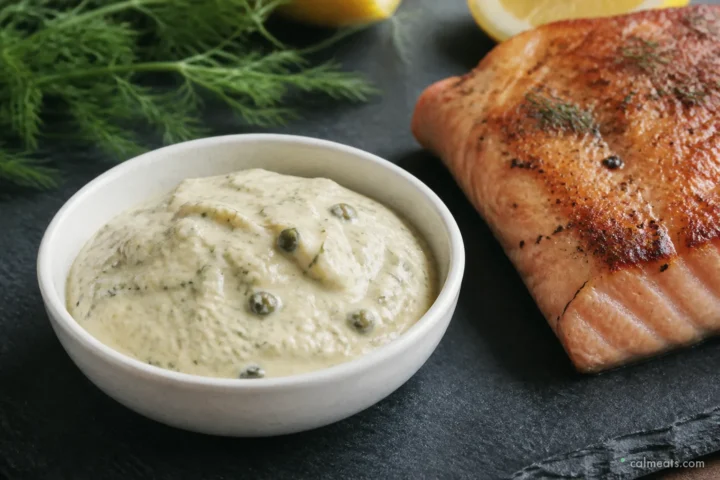
Creamy lemon caper sauce for fish and salmon
A mayonnaise-based lemon caper sauce that holds on the plate, with the ratio that keeps it from splitting.

Taco seasoning mix: the ratio that keeps it from turning bitter or thin
A weighed taco seasoning mix with the correct water ratio, plus why store blends and chili powder aren't…